The Play Book
for Planet Earth | 2025 — Present | Researcher, Content Designer, Visual Designer, Project Manager
A personal, reflection-driven activity book designed to help adults reconnect with play, joy, and passion.
A few years ago, someone explained to me how essential play is for living things — they showed me that even non-human animals, whose lives revolve around survival, still make time for it.
The Play Book was born out of a period in my life when I realized I wasn't having much fun anymore. I felt flattened — less light, less curious, less connected to the things that used to energize me. I could enjoy things, but I rarely felt that full, unselfconscious sense of fun that comes from play.
To address my jumbled state of stress and disconnection, I began trying to live more intentionally, to leave more time for the things that mattered: the passions and play I had left behind somewhere along the way. But I faced a problem: what did I do once I had the time, if I no longer knew what my passions and play things were?
The Play Book grew out of that exploration. It’s an interactive activity book designed to help adults reflect on their relationship with play, joy, and passion — using curiosity rather than pressure.
The Play Book is a self-initiated research and design project exploring the role of play in adult wellbeing, creativity, and self-connection.
I served as the researcher, content designer, visual designer, and project manager for the project, guiding it from initial research through testing, design, and production.
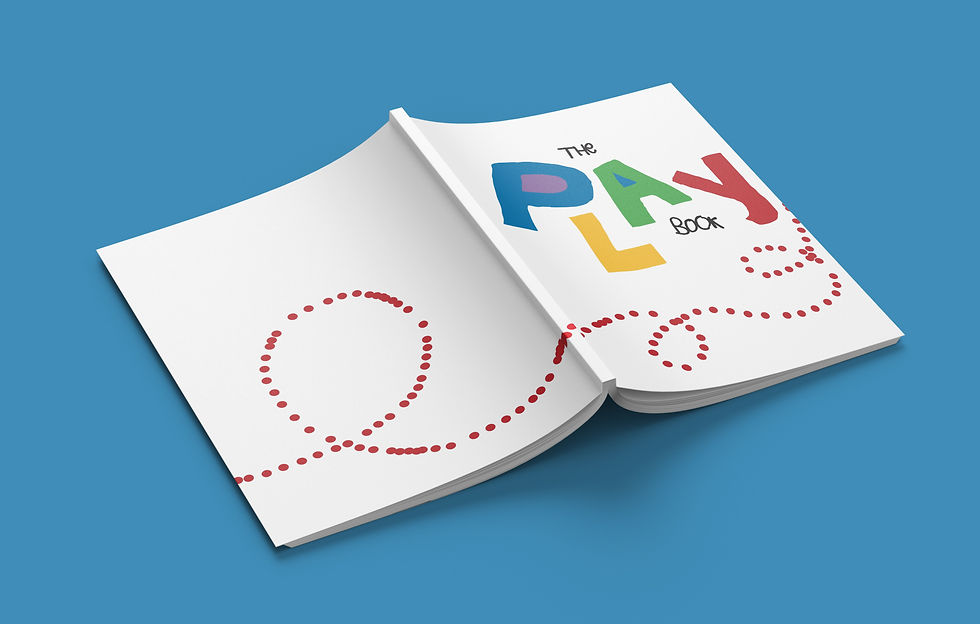


The book uses play personalities and reflective prompts to help people understand how they like to play, what motivates them, and how those insights might reconnect them with joy and purpose.
01
Goals
At its heart, The Play Book is an exploration tool. It isn’t meant to define someone or tell them what they should enjoy — it’s meant to help them notice patterns, memories, and instincts that might otherwise go unexamined. People play in very different ways, and one of the central ideas behind the book is that joy isn’t universal; it’s deeply personal. What feels playful, energizing, or restorative to one person may feel draining or uninteresting to another.
The book is intentionally limited in scope. It can’t list every activity someone might enjoy, and it can’t fully capture the complexity of a person’s identity. What it can do is act as a kickstarter — offering language, structure, and prompts that help users begin asking better questions about themselves. In addition to exploring play styles, the activities are designed to surface values, interests, and long-held curiosities, including reflections on who the user once wanted to be and what still quietly matters to them.
The booklet needed to be short, approachable, and non-intimidating. I wanted it to feel more like a friendly invitation than an assignment. That meant keeping text minimal, instructions open-ended, and letting the visual design carry much of the emotional tone.
This project was also deeply personal. I created the first version with my mom in mind — knowing she was feeling similarly disconnected and wanting to give her something tangible when we couldn’t be physically close. That urgency shaped both the scope and the honesty of the work.
The intended result is not a final answer, but a clearer sense of direction: an understanding of how someone likes to play and what motivates them, and how those two things might intersect. Whether that insight leads to small changes in daily life, deeper self-connection, or even rethinking creative or career paths, The Play Book is meant to open a door—and invite the user to step through it in their own way.
02
Strategy
My research combined formal sources with lived experience. I grounded the content in books like Play: How It Shapes the Brain, Opens the Imagination, and Invigorates the Soul by Stuart L. Brown and The Playful Life by Julie P. Jones, while also revisiting childhood activity books I remembered loving.
Initially, I assumed the book would look like a traditional coloring book — but testing quickly challenged that assumption. I realized that asking users to create all the energy themselves (through blank pages and black-and-white prompts) felt heavy, especially for people already feeling depleted — not to mention those whose play style did not involve creativity. I didn’t want the book to feel like another thing you had to bring to life yourself.
Instead, the strategy shifted: the book itself needed to model playfulness. Color, structure, and partially guided activities became tools to lower the barrier to entry. After testing an early version with friends, I also realized how emotionally demanding reflection can be. In response, I balanced deeper prompts with lighter, “grab-and-go” activities that let the book do more of the work.
I also included a source list at the back — not as an academic appendix, but as an open door for anyone who wanted to keep exploring beyond the book.
The booklet introduces the idea of different “play personalities” as a way of beginning that exploration. These aren’t rigid categories or labels, but loose frameworks — starting points that help users recognize the kinds of play that tend to engage them most. By reflecting on what they loved doing as children, what they feel drawn to now, and what activities make time disappear, users can begin to see how play shows up in their lives and where it may be missing.


Grounded in research, childhood references, and hands-on testing, the book balances thoughtful reflection with playful visuals to keep the experience approachable, engaging, and human.
03
Process
The visual direction for the Play Book was guided by one core question: How do I make this feel safe to play in?
I chose a bold, primary color palette reminiscent of early learning — colors associated with curiosity, experimentation, and low stakes. I carried that sensibility into the illustrations and layouts, using rough, paper-cut shapes and imagery tied to childhood imagination: clouds, squiggles, sunshine, spirals, and dreamed-of futures.
Typography followed the same logic. I paired a simple monospaced font — evoking early computer play and experimentation — with scribbly, handwritten display type. I wanted the book to feel imperfect on purpose, signaling that it’s okay to doodle, cross things out, or make a mess.
Throughout the process, I kept returning to the feeling of kindergarten: a time when play was easy, mistakes were expected, and creativity wasn’t judged. The design is meant to remind users of that freedom — and invite it back in.
04
Collaboration
Although this was a self-initiated project, collaboration was essential. I tested the book with friends and family, paying close attention not just to their answers, but to how they moved through the book — where they paused, laughed, hesitated, or grew tired.
Because the subject matter is personal and emotionally sensitive, feedback was handled with care. I treated these conversations as collaborative reflections and used them to refine pacing, language, and visual density. The goal was never systematic perfection — it was resonance.
05
Challenges
One of the biggest challenges was designing activities that were engaging, insightful, and minimal—three things that don’t always coexist easily. Once the visual language was established, those constraints actually helped push past creative blocks, forcing clarity and restraint.
Production introduced another challenge. I initially designed the booklet to be easily printed at home on standard paper, but full-color printing proved expensive and low-quality through common print services. That conflicted with my goal of accessibility and value. For the next iteration, I plan to reformat the book for standard booklet printing through a fulfillment center, reducing cost while improving quality.
Designing within a limited color palette also required careful choreography. I wanted each spread to feel distinct without breaking cohesion, which turned color usage into a kind of visual puzzle. Similarly, the play-personality quiz pushed me to break my original “one spread per activity” rule—an important reminder that flexibility matters when clarity and tone are at stake.


The Play Book currently exists as a small run of printed copies and a digital PDF that can be used digitally or printed at home. It’s still in an active testing phase, and the work is very much alive.
Early responses suggest that people find the book approachable, affirming, and surprisingly emotional.
Looking ahead, I’m developing a second version informed by additional testing and deeper research. I’m also exploring collaborations with psychology professionals to adapt the book for therapeutic and group settings, with the long-term goal of expanding it into guided tools that support connection, reflection, and play in shared spaces.
The Play Book exists as a tested, evolving prototype, with future plans to grow the project into a broader tool for individual and therapeutic use.