Yarn Card Boxes
for Merida Studio | 2022 | Package Design, Branding, Project Management
Designing a refined, tactile packaging system that transformed yarn cards into both a customization tool and a storytelling object.
As Merida Studio’s material language became more nuanced through its work with artists, the tools used to communicate that language needed to evolve as well. The yarn card boxes reimagined how the studio presented its yarn cards—transforming them from a loose, utilitarian reference into a refined, tactile object that functioned equally as a customization tool and a storytelling artifact about material, craft, and process.


Embedding brand language into physical form insured the functional tool said as much about the brand as it did the studio's customization options.
01
Problem
When Sylvie Johnson joined Merida Studio as artist in residence, she introduced a wider and more expressive yarn palette, shifting conversations toward subtle differences in texture, sheen, and hue. The studio developed yarn cards to communicate these qualities, but struggled to present them coherently. Loose cards were easily misplaced, while an interim booklet felt clumsy and unrefined. The studio needed a better way to house and present the yarn cards — one that honored their material intelligence, supported client conversations, and reflected the studio’s evolving identity.
The boxes needed to be refined, durable, and cost-conscious, despite premium materials like linen wrap increasing production expense. They also needed to be portable enough for client meetings while still feeling elevated and intentional. Brand values ruled out plastic components, and the design had to balance visibility of the yarn cards with structural integrity. Later, when designing a larger “yarn card library” box, portability and shelf-friendliness became additional constraints that required careful compromise.
02
Solution
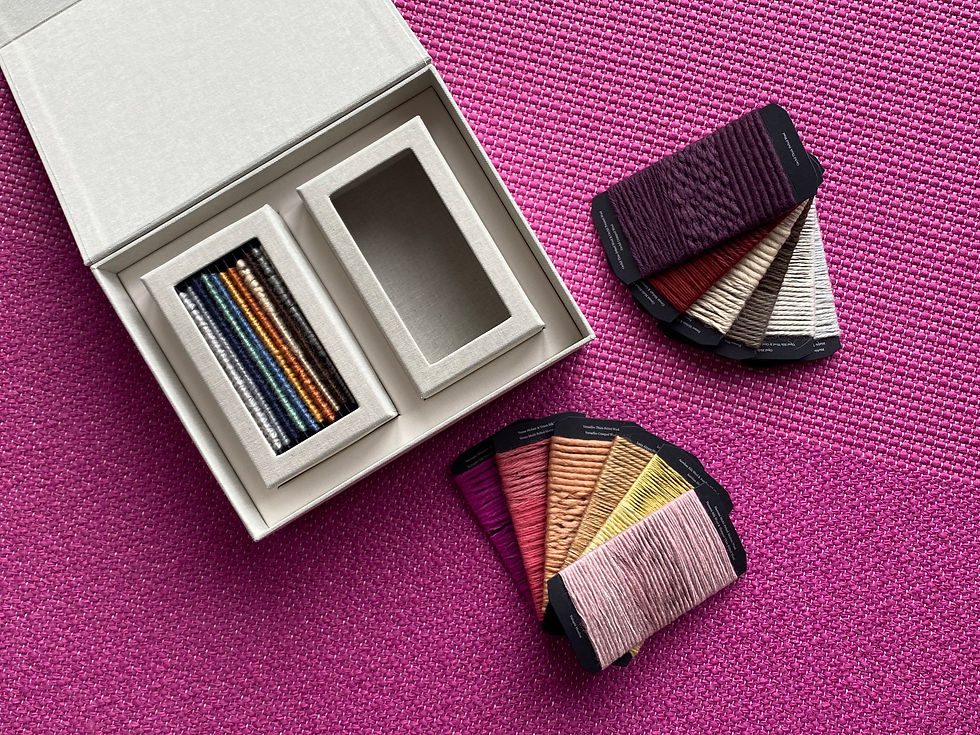
The strategy was to design the box as an object of quiet invitation — subtle enough to let the yarns speak, but intentional in every detail. To address friction from the linen wrap and give the box visual character, I introduced a diagonal cut on the lid, borrowing its angle directly from the studio’s “M” logo and rotating it 90 degrees to embed brand language into form. That same angle carried through to the notched corners of the yarn cards housed within, creating a cohesive system from container to contents.
To prevent the boxes from disappearing into sample libraries, I designed a window cut into the lid — revealing the yarn cards without using plastic, preserving tactility and keeping production aligned with the studio’s natural-material ethos. The window offered a glimpse of color and texture, meant to energize designers the way a painter’s palette does, while carefully balancing structural strength and visual exposure. The larger library box was designed to frame the smaller boxes with negative space, reinforcing elevation while remaining portable enough to be used regularly.
This project relied heavily on collaboration with the box manufacturer, whose technical expertise shaped the final dimensions, margins, and material tolerances. I shared sketches, preliminary measurements, and physical yarn cards so we could evaluate the design from both aesthetic and production perspectives. Their feedback and prototypes helped refine proportions and feasibility, while my role was to ensure the solution remained faithful to the brand’s visual and material values. This back-and-forth allowed design intention and execution to stay closely aligned.


03
Results
The finished yarn card boxes elevated a functional tool into a meaningful brand object. Clients encountered the studio’s palette as something intentional and tactile, reinforcing conversations around material nuance rather than surface color alone. Internally, the boxes brought order and consistency to how yarns were presented and transported. While compromises were made in favor of usability—particularly in the size of the library box—the final design succeeded in making the yarn cards feel special, considered, and worthy of attention, strengthening both customization conversations and brand perception.
The yarn card boxes elevated material conversations, improved usability, and reinforced Merida Studio’s craft-forward, art-minded identity.